Stop Using Your Key Lockbox Wrong: The Shocking Truth Every Turo Host Must Know in 2026

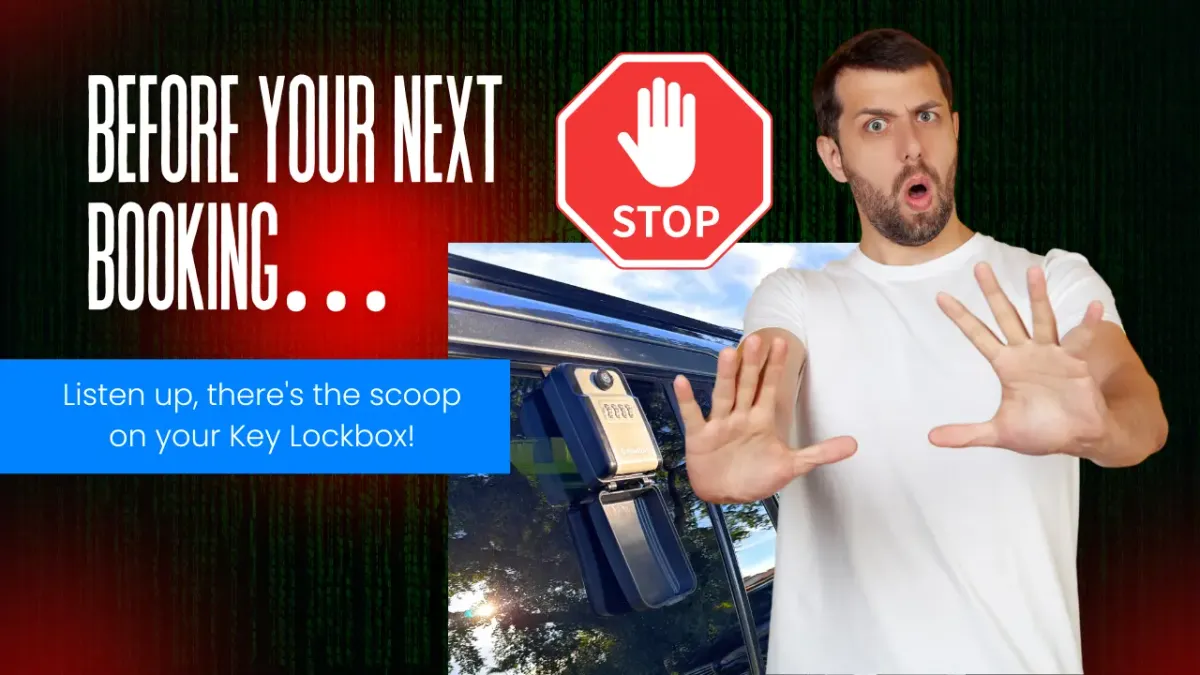
The Hidden Problem With How Hosts Use Key Lockboxes
If you’re a Turo host or run a small car rental fleet, there’s a good chance you’re already using a Key Lockbox. It’s become one of the default tools for remote operations: it allows self-check-in, avoids awkward in-person key handoffs, and lets you manage cars without being physically present.
The problem isn’t the Key Lockbox itself. The problem is the expectation many people attach to it.
You’ll hear things like:
- “If the key is inside a Key Lockbox, my car is safe from theft.”
- “I put the key inside a Faraday/key fob pouch and then into the lockbox, so nobody can steal the car.”
- “My car has Killswitch and lock/unlock so my car is protected.”
Those ideas sound logical on the surface, but they don’t match how modern vehicle theft actually works in 2026. This post is not about telling you not to use a Key Lockbox. It’s about helping you use it for what it truly is: an access control tool, not an anti-theft system.
Vehicle Theft in 2026: Why This Conversation Matters
Every year, hundreds of thousands of vehicles are stolen in the United States. Many of those vehicles are:
- Properly locked
- Parked in normal residential or commercial areas
- Equipped with alarms, immobilizers, and sometimes GPS devices
Very few of these thefts happen because “the key was not inside a lockbox.” Thieves are not walking around thinking, “Oh, the key is in a lockbox, I guess I can’t steal this one.”
To understand why the Key Lockbox and even a key fob pouch won’t “save” your car, you first need to understand what a modern thief actually does.
How Cars Really Get Stolen in 2026
Many hosts still imagine theft like this: if the car can’t sense the key, it won’t unlock or start, and therefore it can’t be stolen. That’s simply not how it works anymore.
In 2026, theft is much more about electronics, tools, and speed than about whether your key is transmitting signal from a lockbox.
One of the most common patterns involves key cloning and OBD programming. A thief gains physical access to the cabin—often by breaking a small window or using a basic lockout tool. Once inside, they plug an electronic programmer into the OBD port and use it to clone or program a new key. In a matter of minutes, they’ve created their own working key fob and can start the engine as if they were the owner. Your original key could be in your house, in a pouch, or locked away in a box. It doesn’t matter; they’re talking directly to the vehicle’s computer.
Another common avenue is the use of legitimate lockout tools. The same type of kits sold to locksmiths and roadside services air wedges, long-reach rods, and door shims can be misused. These tools let someone open a locked vehicle in just a few minutes without touching your Key Lockbox at all.
And of course, there’s still good old-fashioned forced entry. Breaking glass, prying a door, pushing or towing the vehicle, and then pairing that with electronic tools or taking it apart later. None of this is affected by whether your key happened to be inside a metal box with a code.
That’s the core reality: once someone is willing to break in and has basic tools, the location of your key fob is no longer the main security barrier.
The Big Myth: “My Key Lockbox Protects My Car From Theft”
In the Turo and car-rental world, the Key Lockbox has picked up a reputation it never deserved. People talk about it as if it were a theft-prevention device, a high-security vault, or some kind of shield that keeps the vehicle safe as long as the key is inside.
It isn’t any of those things.
A Key Lockbox has one primary job:
to store the key in a controlled place and give access only to someone who is authorized to open it.
That’s it.
It’s a convenience and access tool, not an anti-theft system. It was created so you don’t have to be physically present to hand a key to your guest or renter. It lets you run true self-check-ins and remote operations. Those are powerful benefits but they are operational benefits, not security guarantees.
If a determined thief wants a specific vehicle and is willing to break glass, use electronic programmers, or tow the car, the presence of a lockbox doesn’t suddenly stop them.
The Key Fob Pouch Inside the Lockbox: The “Smart” Trick That Isn’t
Now let’s talk about one of the most popular myths:
“I put the key inside a Faraday/key fob pouch and then into the Key Lockbox. Since the key doesn’t send a signal, they can’t steal the car.”
On paper it sounds brilliant. In practice, it’s just another layer of false comfort.
A key fob pouch (also called a Faraday pouch) is designed to block or reduce the wireless signal from your key. This is useful when the car is parked at home or work and you don’t want someone standing outside your property using a relay attack to “boost” the signal and unlock the car.
What it does well:
- Stops or reduces the wireless broadcast of the key fob
- Can help against some relay-style attacks when the car is parked
What it does not do:
- It does not stop someone from breaking a window.
- It does not stop someone from plugging into the OBD port.
- It does not stop someone from cloning a new key once they have access to the interior.
- It does not magically turn your Key Lockbox into a “theft proof” system.
Putting the fob inside a Faraday pouch and then into a Key Lockbox may help with signal hygiene, but it does not change how modern theft works. Once a thief is inside the vehicle with tools, your original key’s radio signal is no longer relevant. They can program a new key that the car will accept, and they never needed your original fob to transmit anything.
You can absolutely use a key fob pouch if it fits your process. Just don’t confuse it with a complete security solution. Inside or outside the lockbox, a fob pouch is a signal blocker, not a thief blocker.
So What Is a Key Lockbox Actually For?
If a Key Lockbox is not an anti-theft device, what is its real purpose for Turo hosts and rental operators?
First, it’s a self-check-in enabler. Instead of coordinating exact times, waiting for guests in parking lots, or leaving keys in risky places (like on top of the tire or under a mat), you can store the key in a stable, secure location. You send the guest a code or access method, and they handle the pickup on their own schedule.
Second, it’s a form of access control. Random people walking by cannot simply reach in and grab your key. The key is protected from casual tampering, kids, and opportunistic passersby. Only someone who has the correct code or access details can open the lockbox and take the key.
Third, it improves your operations and professionalism. Guests feel like they’re dealing with a structured system rather than something improvised. It helps you scale from one or two vehicles to a small fleet without multiplying the number of in-person key handoffs you need to do.
All of that is real value. But it’s crucial to understand that it is value in terms of process, convenience, and controlled access not in terms of making your car immune to theft.
And What About GPS Tracking Is That “Real Protection”?
GPS trackers are another tool that often get thrown into the same category as lockboxes in people’s minds. Just like Key Lockboxes, GPS devices are incredibly useful but they are also commonly misunderstood.
A good GPS tracker can help you:
- See real-time location
- Review trip history
- Track mileage and usage
- Set alerts and geofences
- Assist in recovery if the vehicle is taken
What it does not do is physically prevent someone from breaking into or taking the car. A thief can still break a window and drive away, tow the vehicle, find and remove the GPS device, or in some cases use a jammer.
GPS is best understood as a management and recovery tool, not a force field around the car. Just like the Key Lockbox, it is extremely valuable when used for what it was designed to do—but it’s not invincibility.
The Right Mindset for Turo Hosts and Rental Operators in 2026
If you want to be sustainable in this business long-term, you need the right mental model for your tools.
Think of it this way:
- The Key Lockbox is for controlled key access and self-check-in.
- The key fob pouch is for signal blocking, mainly against relay-type attacks.
- The GPS tracker is for monitoring, accountability, and recovery.
- Insurance is for financial protection when something goes wrong.
- Your operating procedures (where you park, how you screen guests, how you respond to issues) are your real first line of defense.
No single device will replace all the others. The more you expect one tool to “do everything,” the more you set yourself up for disappointment.
When you see each tool as one layer in your overall strategy, everything starts to make more sense and your decisions become much smarter.
Still Think a GPS With Kill Switch Makes You 100% Theft-Proof?
At this point you might be thinking:
“Okay, I get it about the Key Lockbox and the key fob pouch…
But if I use a GPS with kill switch, then I’m finally 100% protected from theft, right?”
That’s another very common belief — and unfortunately, it’s just as misleading.
A GPS with ignition kill or remote disable is a powerful tool, but it still doesn’t magically stop:
- Someone from towing your vehicle
- Someone from breaking in, putting it in neutral, and rolling it away
- Someone from disabling power, antennas, or the GPS unit itself
- Someone from moving the car before you even realize something is wrong
Just like the Key Lockbox, a GPS with kill switch is a layer, not a force field.
If you’re still counting on “GPS + kill switch” to make your cars untouchable, you really need to see the bigger picture.
👉 If you still think a GPS (even with kill switch) will keep you 100% safe from theft, read this next:

GPS Is No Longer Anti-Theft: The Real Truth Exposed”
An honest guide for Turo Hosts and rental fleets. GPS is vital for ops, not a theft shield. Learn the layered steps that protect vehicles.
VIEW ARTICLEThat article goes deeper into:
- Why GPS used to be considered “anti-theft”
- How thieves adapted to it
- What GPS is really good for in 2026
- How to integrate GPS into a realistic, layered protection strategy
Read that next if you want the full, unfiltered truth.
Final Thoughts: Use Your Key Lockbox for What It Was Truly Designed For
The goal of this article is not to convince you to stop using a Key Lockbox. In fact, if you’re serious about running a remote Turo or rental operation, a Key Lockbox is almost essential.
The goal is to reset expectations.
Your Key Lockbox is fantastic for:
- Allowing smooth self-check-ins
- Reducing the need for in-person meetups
- Keeping the key away from random hands
- Making your operation feel structured and professional
But your Key Lockbox will not:
- Stop a determined thief with tools
- Replace a proper insurance policy
- Make your vehicle 100% theft-proof
- Become a “magic shield” just because the key is in a pouch inside it
Before your next booking, take a moment to look at your setup and ask:
- Am I using my Key Lockbox as an access and convenience tool, or am I secretly counting on it to prevent theft?
- Do I have the right combination of insurance, GPS, and operational habits to actually manage risk?
- Do I understand the difference between controlling who gets the key and stopping a professional thief?
In 2026, the hosts and operators who understand these distinctions are the ones who last. Use your tools for what they are really meant to do and your business, your expectations, and your stress levels will all be in a much better place.